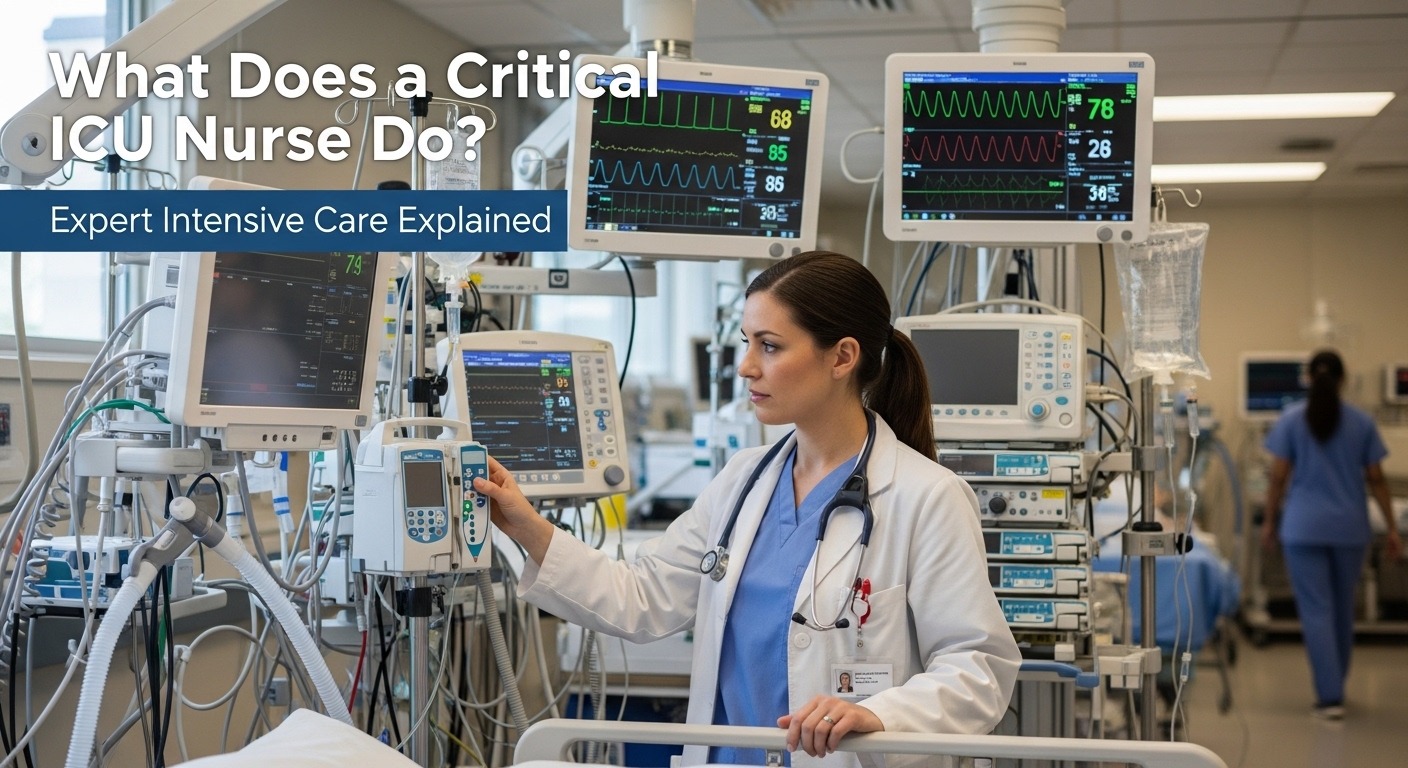
When a patient’s condition becomes life-threatening, ordinary nursing is no longer enough. This is where a critical ICU nurse steps in—highly trained, intensely focused, and prepared to act in seconds. From managing ventilators to responding to sudden medical emergencies, ICU nurses are the backbone of modern intensive care units.
This in-depth guide explains what does a critical ICU nurse do, their daily responsibilities, the skills they bring to critical settings, and why their role is vital in hospitals and home-based ICU environments.
Understanding the Role of a Critical ICU Nurse
A critical ICU nurse is a specialized healthcare professional who provides continuous care to patients with severe, unstable, or life-threatening conditions. These patients are often admitted after major surgeries, traumatic injuries, heart attacks, strokes, or serious infections.
Unlike general nursing roles, ICU nurses operate in high-pressure environments where advanced technology, rapid decision-making, and precise execution are essential.
The role of a critical care nurse revolves around stabilizing patients, preventing complications, and supporting recovery through expert clinical judgment.
What Does a Critical ICU Nurse Do on a Daily Basis?
The duties of a critical ICU nurse go far beyond routine patient care. Their work combines clinical expertise, emotional resilience, and constant vigilance.
Core Responsibilities Include:
- Continuous critical patient monitoring of vital signs such as heart rate, oxygen saturation, and blood pressure
- Administering IV medications, sedatives, and life-saving drugs
- Managing ventilator care and oxygen therapy
- Performing life support monitoring and responding to alarms instantly
- Coordinating with doctors during emergencies
- Providing advanced nursing care for unstable patients
An ICU nurse may care for one or two patients at a time, allowing them to give undivided attention where every second matters.
ICU Nurse Responsibilities in Critical Situations
The ICU nurse responsibilities increase dramatically when a patient’s condition deteriorates. These professionals are trained in emergency response nursing, enabling them to act before a doctor even arrives.
Their responsibilities include:
- Rapid assessment during cardiac or respiratory arrest
- Immediate intervention to prevent organ failure
- Adjusting ventilator settings and IV dosages
- Preparing patients for emergency procedures
This level of responsibility defines the true value of a critical care nurse in intensive settings.
Intensive Care Unit Nurse Duties Explained
The intensive care unit nurse duties differ depending on the patient’s diagnosis, but precision and vigilance remain constant.
Key duties involve:
- Delivering continuous ICU nursing care
- Managing complex medical equipment
- Supporting families during emotionally intense moments
- Ensuring strict infection control
- Assisting in post-surgery ICU care
Whether in a large hospital or a private setting, an intensive care nurse plays a vital role in patient survival.
ICU Patient Care: More Than Medical Treatment
True ICU patient care extends beyond machines and medicines. A critical ICU nurse also provides psychological support, helping patients cope with fear, pain, and confusion.
Patients who cannot speak or move rely entirely on their nurse for comfort, dignity, and reassurance. This human connection is just as important as medical expertise.
ICU Medical Support in Hospitals and Homes
Traditionally, hospital ICU nursing has been the standard for critical patients. However, modern healthcare has expanded into home ICU nursing care, allowing patients to receive intensive treatment in familiar surroundings.
An experienced ICU nurse for critical patients can:
- Set up ICU-level equipment at home
- Provide round-the-clock monitoring
- Coordinate with physicians remotely
- Ensure safe recovery outside the hospital
This approach is increasingly popular for long-term or post-acute care cases.
Expert ICU Nursing Care Services for Severe Patients
Expert ICU nursing care services are essential for individuals suffering from:
- Severe infections
- Neurological disorders
- Respiratory failure
- Cardiac complications
Critical care nursing for severe patients demands advanced certifications, hands-on ICU experience, and the ability to remain calm under extreme pressure.
A professional ICU nurse services provider ensures that patients receive hospital-grade care wherever they are.
Arika Ashley Services Trusted Critical Care at Home and Hospital
Arika Ashley is a trusted name in professional nursing and patient support services, offering comprehensive healthcare solutions tailored to critical and non-critical patients alike. The company provides expert nurses trained in ICU-level care, ensuring patient safety, comfort, and recovery.
Their services include structured nursing care plan, customized nursing care plan in Pakistan, and condition-specific support such as nursing care plan for fever, nursing care plan for diarrhea, and nursing care plan for hypertension. Alongside nursing, Arika Ashley also facilitates access to essential medical equipment, including electric bed price in Pakistan, electric bed for patient in Pakistan, and high-quality electric beds in Pakistan.
In addition, the company supports healthcare facilities and home patients through reliable connections with medical equipment importers in Pakistan, options for medical equipment online purchase in Pakistan, and trusted medical equipment suppliers in Pakistan offering quality medical equipment Pakistan nationwide. Their specialized services extend to home patient care home nursing nurse Karachi, home patient care home nursing nurse Karachi Karachi, and comprehensive home patient care services in Karachi, making critical and long-term care accessible and dependable.
Why Critical ICU Nurses Are Essential to Healthcare
Without a skilled critical ICU nurse, intensive care simply cannot function. These nurses bridge the gap between technology and humanity, delivering precision-based treatment while advocating for patient well-being.
Their expertise saves lives every day—whether inside a hospital ICU or through carefully managed home care setups.
Final Thoughts
So, what does a critical ICU nurse do? They monitor, intervene, protect, and heal—often all at once. From managing life-support systems to offering compassionate reassurance, ICU nurses are among the most vital professionals in healthcare.
As critical care continues to evolve, the demand for skilled ICU nurse, intensive care nurse, and critical care nurse professionals will only grow—making their role more important than ever.
Frequently Asked Questions (FAQs)
1. What does a critical ICU nurse do?
A critical ICU nurse provides specialized care to patients with life-threatening conditions. Their role includes continuous monitoring, administering medications, managing ventilators, and responding immediately to medical emergencies in intensive care settings.
2. What is the difference between an ICU nurse and a critical care nurse?
An ICU nurse works specifically in intensive care units, while a critical care nurse is a broader term that includes nurses trained to care for critically ill patients in ICUs, emergency units, and sometimes home ICU setups. Both roles involve advanced patient monitoring and emergency care.
3. What are the main ICU nurse responsibilities?
Key ICU nurse responsibilities include critical patient monitoring, ventilator management, medication administration, emergency response, infection control, and providing emotional support to patients and families.
4. What skills are required to become a critical ICU nurse?
A critical ICU nurse must have strong clinical judgment, knowledge of life-support systems, experience in emergency response nursing, excellent communication skills, and the ability to work calmly under pressure.
5. Can ICU nursing care be provided at home?
Yes, home ICU nursing care is possible for stable but critically ill patients. A trained ICU nurse for critical patients can manage medical equipment, provide continuous monitoring, and coordinate with doctors to ensure safe recovery at home.
6. What type of patients need ICU medical support?
Patients who need ICU medical support often include those with severe infections, respiratory failure, heart conditions, neurological disorders, or patients recovering from major surgeries or trauma.
7. What is included in advanced nursing care in the ICU?
Advanced nursing care includes ventilator care, life support monitoring, complex medication administration, wound management, post-surgery ICU care, and rapid intervention during medical emergencies.
8. How does ICU patient care help improve survival rates?
Proper ICU patient care ensures early detection of complications, immediate medical response, and continuous observation, all of which significantly improve patient survival and recovery outcomes.
9. Are professional ICU nurse services available in Pakistan?
Yes, professional ICU nurse services are available in Pakistan for both hospital and home settings, offering expert care, structured nursing care plans, and access to essential medical equipment.
10. Why is a critical care nurse important in emergency situations?
A critical care nurse is often the first to recognize life-threatening changes in a patient’s condition. Their quick decision-making and emergency response skills can prevent organ failure and save lives.